
Renting a self storage unit seems simple enough. Just open the unit door and put your belongings in, right?
Actually, not preparing for storage can make your storage unit difficult to use, leading to wasted time and money, stress and even damaged belongings.
A little planning goes a long way into making your storage experience much easier. Read on to learn seven of the most common self storage mistakes we’ve seen, and how you can avoid them.
If you’re like a lot of people, you’re feeling a little unsure about how much room you’ll need to store your belongings.
While it may seem like a good idea to go with a smaller unit to save money, trying to access a fully crammed unit is frustrating. Not to mention, it can damage your belongings.
On the other hand, renting a unit that’s much larger than you need means you’re paying for space you’re not using.
To choose the right unit size for your needs, we recommend writing down everything you’re planning on storing. If you’re storing large items like furniture, take measurements. Then, think about how much floor space you’ll need, and how tall you can safely stack your belongings. You can use that information when looking at a facility’s storage unit sizes.
Still have questions about the right size unit for your belongings? Just contact us. We’ll be happy to answer questions about how much room you’ll need.
While your end goal is to find a unit that can fit your belongings, don’t forget that you should also consider a facility’s additional features.
The right size storage unit is important, but convenient access that works with your schedule, security features and convenient online rental and payment can make a huge difference in your storage experience.
When comparing facilities, look for features like:
24/7 access
24/7 digital video surveillance
Convenient online rental
Online bill pay
Gated access
Clean, well-kept facility
While many items can be stored in a standard, non-climate controlled unit, some items need a little extra protection. Here in Decatur, our summers are swelteringly hot. Combined with humidity, high temperatures can damage items like:
Electronics
Art and photographs
Antiques
Musical instruments
Collectibles
Vinyl
Important documents
Renting climate controlled storage helps keep your most sensitive belongings safe from warping, melting, cracking, fading or suffering other types of damage.
It’s November and you want to access your holiday decorations. The only problem? Three months ago, you shoved everything into your storage unit three months ago without a plan.
Now, that box of holiday decorations is buried at the very back of your unit, and you’ll need to move a lot of heavy boxes to access it.
Before you start loading your unit, make a basic plan for where everything will go. Put larger, heavier items toward the back of your unit, as well as items you don’t need frequent access to. Put items you’ll need more frequently closer to the door, so you won’t have to go digging.
Label your boxes clearly with detailed descriptions. “Holiday Decorations: Outdoor Lights” is much more helpful than just “Holiday.”
It can also help to group similar belongings together. Keep all your seasonal decorations in one area, and all your outdoor gear in another. It will make finding what you need much easier later on.
Don’t just put your belongings in beat-up boxes from your last move or plastic bags from your last shopping trip. Packing your items improperly can lead to damage, especially if you plan to store for more than a month or two.
Use sturdy cardboard boxes or plastic bins instead. If storing fragile items, wrap them in bubble wrap or packing paper to further protect them, and label the box as “fragile.”
If you’re storing heavy items like books, don’t overfill boxes. It can make them too heavy to lift and store.
Storing furniture? Cover it with blankets or furniture covers to prevent dust, scratches and other damage.
No matter what you’re storing, make sure everything is clean and dry before storing. Damp belongings can be damaged by mildew or mold, especially when stored long-term.
Many people assume that their stored belongings are covered through their homeowner’s policy, but that may not be true. In fact, your premiums could go up or your homeowner’s policy could be canceled if you file a claim.
Protect your storage against the unexpected by adding tenant protection when you rent a unit, or add coverage to your existing rental. Before storing anything, review your policy and rental agreement so you fully understand what’s covered.
You can store a lot in a storage unit… but you can’t store everything. Storage facilities have restrictions on what they allow you to store. Most prevent you from keeping food, hazardous materials, flammable substances and illegal items in your unit.
Before moving in, review your facility’s rental agreement. If you’re unsure if something’s allowed, ask the staff. It’s always better to ask before your move-in day than get into trouble later.
Some of the most common storage mistakes we see can easily be avoided with a little preparation.
Before moving into your unit, understand the facility’s rules and features, pack and label your boxes carefully and organize with access in mind. It will save you countless hours, no matter if you’re downsizing, renovating or decluttering your home.
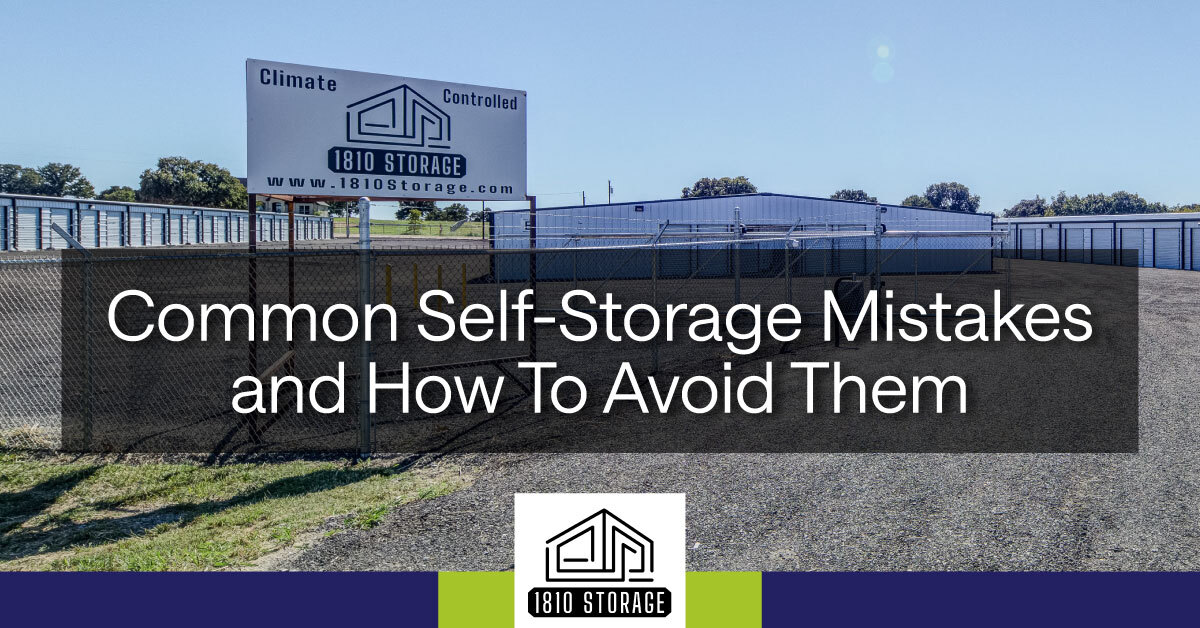
Ready to choose a unit and store with us? Located in Decatur, Texas, at 469 Farm-to-Market Rd, 1810 Storage offers both non-climate and climate controlled units, drive-up access, 24/7 gated access and digital video surveillance.
Give us a call to ask any questions about self storage, or book a unit online today to start storing!